

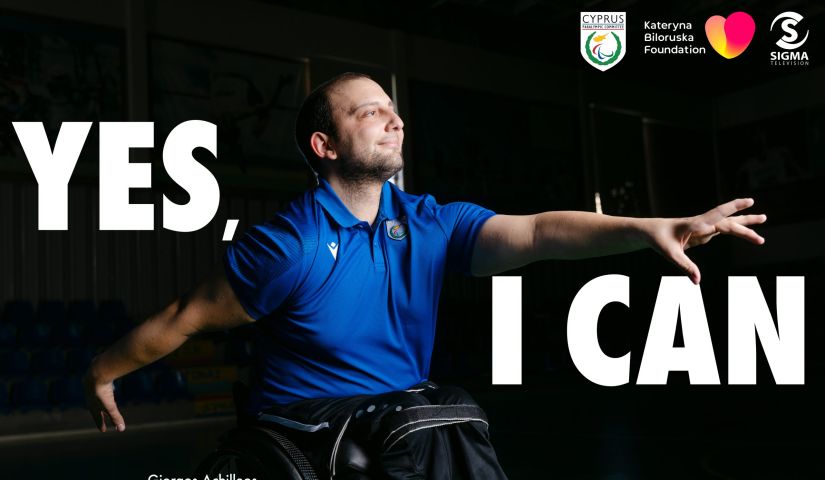
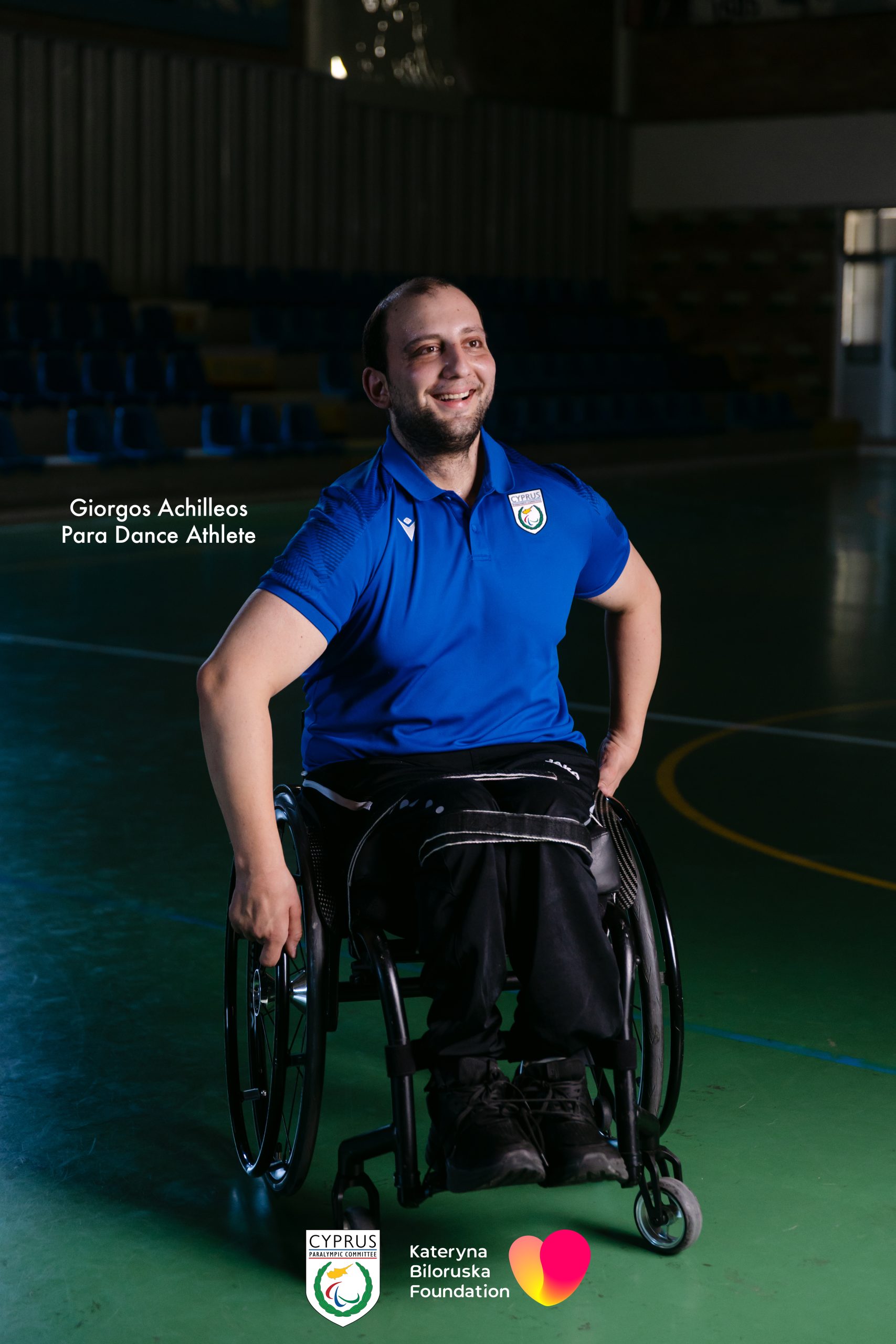
Para Dance athlete Giorgos Achilleos shares his inspiring journey as part of the “Yes, I Can” social campaign – an initiative by the Kateryna Biloruska Foundation and the Cyprus Paralympic Committee, celebrating courage, inclusion, and the spirit of Cyprus’ Paralympic athletes.
Through movement, creativity, and extraordinary discipline, Giorgos transforms his wheelchair into a tool of expression. His story is a reminder that strength is not defined by circumstance, but by the mindset we choose every day.
What “Yes, I Can” means to Giorgos Achilleos
For Giorgos, “Yes, I Can” is far more than a motivational phrase – it is a foundation for how he chooses to live.
“It’s the belief that I can achieve anything I set my mind to,” he shares. “The path to get there might look different for me – but that doesn’t change what’s possible.”
He explains that people with disabilities develop a unique sharpness over time. Life constantly asks them to solve problems creatively, adapt to challenges, and navigate the world in innovative ways.
“This daily problem-solving strengthens your mind. ‘Yes, I Can’ is the proof that we can always find our own way forward.”
A defining moment on the international stage
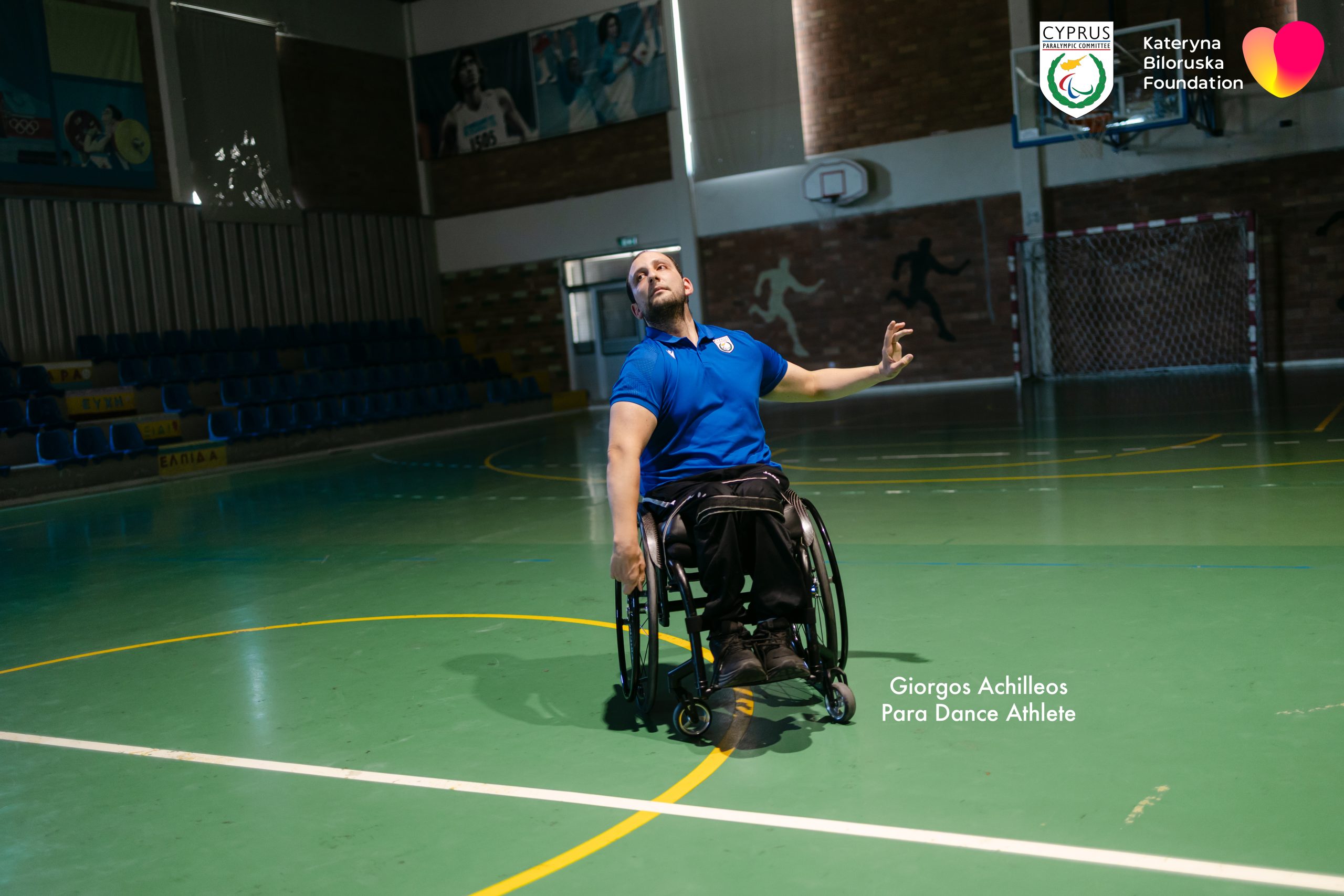
While Giorgos says overcoming obstacles is part of everyday life for any athlete – and even more so for a para athlete – one moment stands out. His first international competition in Amstelveen in 2023 became a turning point.
“After a year and a half of intense training, I realised I wasn’t just practicing anymore. I was competing among the best paradancers in the world. At that moment, the barrier of ‘Can I?’ disappeared.”
Standing on that stage, he understood something fundamental: he belonged there – and with dedication, he could one day reach the top level himself.
Sport as a path to self-understanding
For Giorgos, sport is not simply a discipline – it is a mirror.
“Through training, I learned to recognise my strengths, respect my limits, and work every day to broaden them. It gave me inner strength I didn’t know I had.”
Sport also shifted how he sees his place in the world. He no longer views himself only as an individual athlete.
“I feel a sense of purpose – maybe even responsibility – to show other people with disabilities the way towards sport and active participation. Social inclusion is still a major issue in many countries. If my journey helps even one person take their first step, then sport has defined my place in the world in the best possible way.”
The challenges behind the scenes – and what fuels him
When asked about the biggest challenges he has faced, Giorgos points not to physical barriers, but to something more universal.
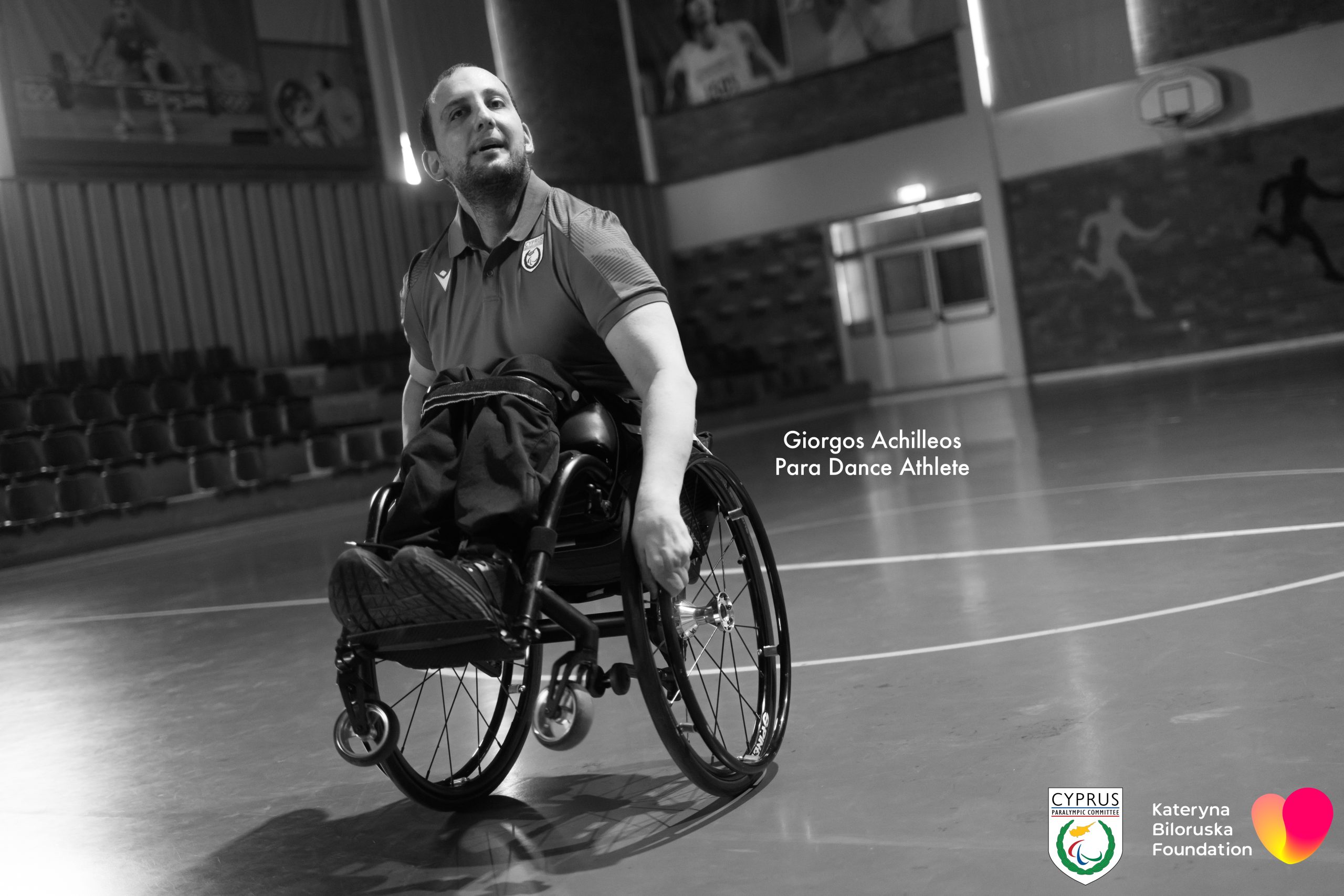
“The hardest battle is the internal one. The decision to get up and move – whether you stand on your feet or sit in a wheelchair – is the real challenge.”
His motivation comes from two powerful sources:
1. Personal joy and progress
“The feeling of improvement, of becoming better, fuels me. Dancing in my wheelchair – the movement, the excitement – is a source of pure happiness.”
2. Purpose and impact
“The idea that my journey might inspire someone else with a disability keeps me going. If my efforts encourage even one person to leave the house, join a community, or discover sport, then every training session has meaning.”
A message to young people with disabilities
Giorgos’ advice is direct, heartfelt, and clear:
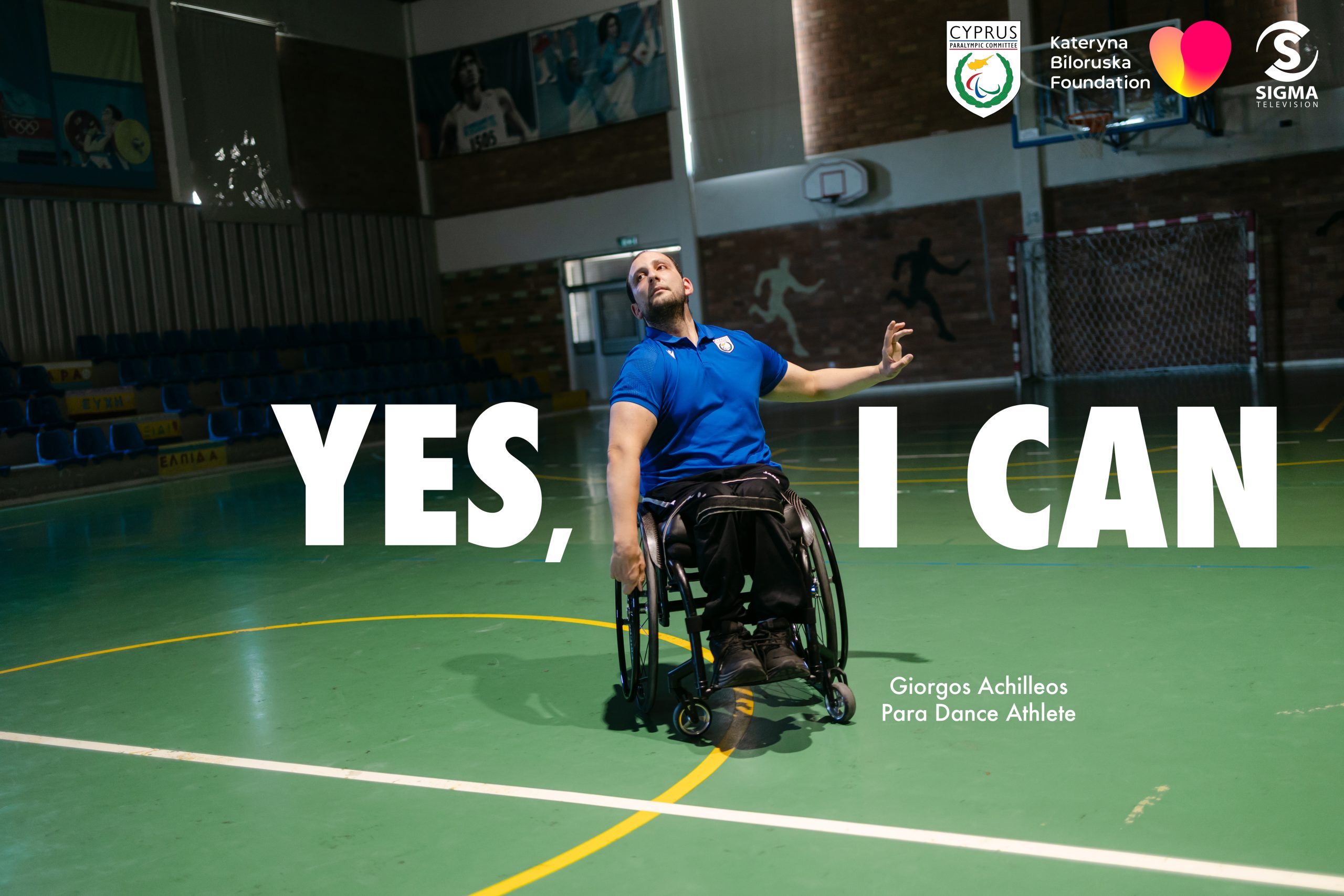
“Don’t wait for tomorrow. Start yesterday.”
He warns against confusing sport with elite sport.
“Sport is movement, joy, life. Try anything that sparks your interest. If you don’t like it, move on to the next, and the next. Think of it as an adventure until you find what brings you fulfillment.”
The real rewards, he says, start from day one: social connection, continuous growth, and – above all – self-confidence. “These are the true medals you earn every day.”
A vision for how society should see Paralympians
Giorgos dreams of a world where Paralympic athletes are seen simply for what they are:
athletes and people – nothing more, nothing less.
“The dedication, sacrifices, training hours, passion – they’re the same for Olympians and Paralympians. Disability is a characteristic, not an identity.”
He emphasises that people with disabilities don’t need pity or special treatment – they need equal access, equal respect, and equal opportunity.
ʼ“That includes infrastructure, opportunities, and recognition. It’s what every high-level athlete deserves.”
The dream that guides him
Giorgos’ biggest dream is not a medal or a title – but a lifelong journey. “I want to become a better version of myself every day – as an athlete and as a person. These two identities are deeply connected.”
And his ultimate vision reaches beyond sport: “If my journey inspires even one person or changes one biased opinion, then I will have won the most important competition of my life.”
Additional. Yes, I can – it’s a social campaign dedicated to the strength, pride, and unity of Cyprus’ Paralympic athletes, communities and involve future athletes initiated by Kateryna Biloruska Foundation and the Cyprus Paralympic Committee
It’s purpose
- Increase the recognition of Paralympic athletes of Cyprus
- Reduce the stigmatization of society and prejudice
- Increase the number of young people with disabilities who started playing sport
- Promote inclusive sport and access for all